



Introduction
Extreme heat is becoming increasingly common across many parts of the United States, with longer and more intense heat waves driven by climate change. In the hottest regions of the country - such as theSouthwest and the South - summers are increasingly documented as dangerously and unbearably hot.Extreme heat poses serious health risks and can even be fatal, especially for groups that struggle to regulate body temperature, including seniors, young children, and pregnant women. In fact, one study found that seniors aged 60 and older accounted for 45% of all heat-related deaths in 2023.
Moreover, extreme heat is a critical health equity issue, with its effects felt unequally across communities.Low-income individuals and communities of color are particularly vulnerable, often due to limited access to air conditioning, health care, and other protective resources. The high cost of air conditioning adds to this challenge, especially at a time when consumers are financially strained, and electricity prices remain elevated.
The primary federal program aimed at assisting low-income households with energy costs is the LowIncome Home Energy Assistance Program (LIHEAP).
While the program has historically focused on winter heating, administrators have an opportunity to rebalance allocations to address the health risks posed by increasingly intense heat waves. State officials managing LIHEAP, who operate within departments such as Health and Human Services (HHS) or StateEnergy Offices, should consider distributing block funding strategically across heating, cooling, and crisis assistance programs to address this growing need.
Though often associated with winter heating, LIHEAP is also critical for summer cooling assistance
One of the most important opportunities for addressing the health risks of rising extreme heat is also one of the most intuitive: increasing access to air conditioning.
Established in 1981, LIHEAP was originally designed to help people pay for winter heating expenses, which remains its most well-known purpose. However, since 1984, the program has expanded to include summer cooling assistance. States have considerable flexibility in how they allocate LIHEAP block grant funds, which can support not only heating and cooling programs but also year-round energy crisis assistance and home weatherization efforts.
While every state uses a portion of its LIHEAP funds for winter heating programs - even in states with mild winters like Hawaii and Florida - fewer than half allocate any funding to summer cooling programs. This is true even in many states that regularly experience extreme summer temperatures.
As extreme heat escalates, the federal government should evolve how it thinks about LIHEAP
LIHEAP is a federal block grant program, meaning each state receives a fixed amount of federal funding annually, which they can allocate across various energy assistance programs as they see fit. Air conditioning is a vital tool in reducing heat-related deaths, with research showing that home air conditioning has reduced heat-related fatalities by 80% over the last six decades. As summers grow harsher, air conditioning will become even more essential for mitigating health risks.
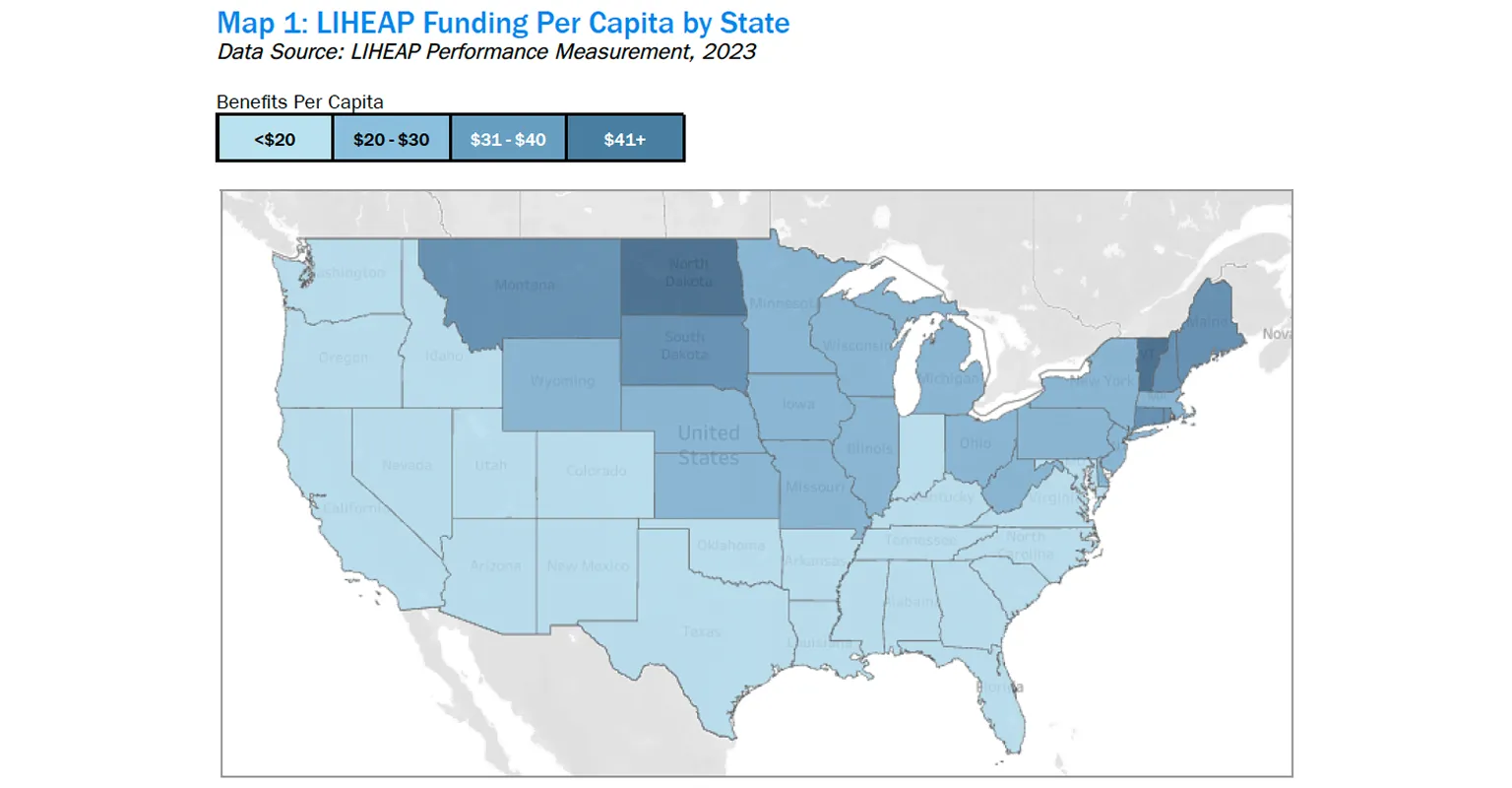
However, the federal funding formula for LIHEAP disproportionately favors states with extreme winters over those with extreme summers (see Map 1 below). For example, a staggering 48% of all heat related death sin the US occur just in Arizona, but Arizona receives the lowest amount of LIHEAP funding per capita in theUS - Arizona receives ~$8 per capita, a third of the US average of ~$23.
Although the allocation formula that determines each state’s block grant is complex, the results are clear:states with harsh summers tend to receive less funding than they would if heating and cooling needs were treated equally. As a result, states most affected by extreme heat—particularly in the Southwest and across the Sun Belt— are missing out on hundreds of millions of dollars that could not only help resident scope with extreme summer heat, but also drive better health and save lives.
The federal government should consider updating the LIHEAP formula such that summer cooling expenses are treated the same as winter heating expenses. Protection from extreme cold remains very important, and if Congress is hesitant to make changes that would take any funding away from existing winter heating programs in colder states, they should consider increasing the total amount of LIHEAP funding provided to states.
Regardless of federal changes, states can reexamine their LIHEAP allocations in light of rising heat
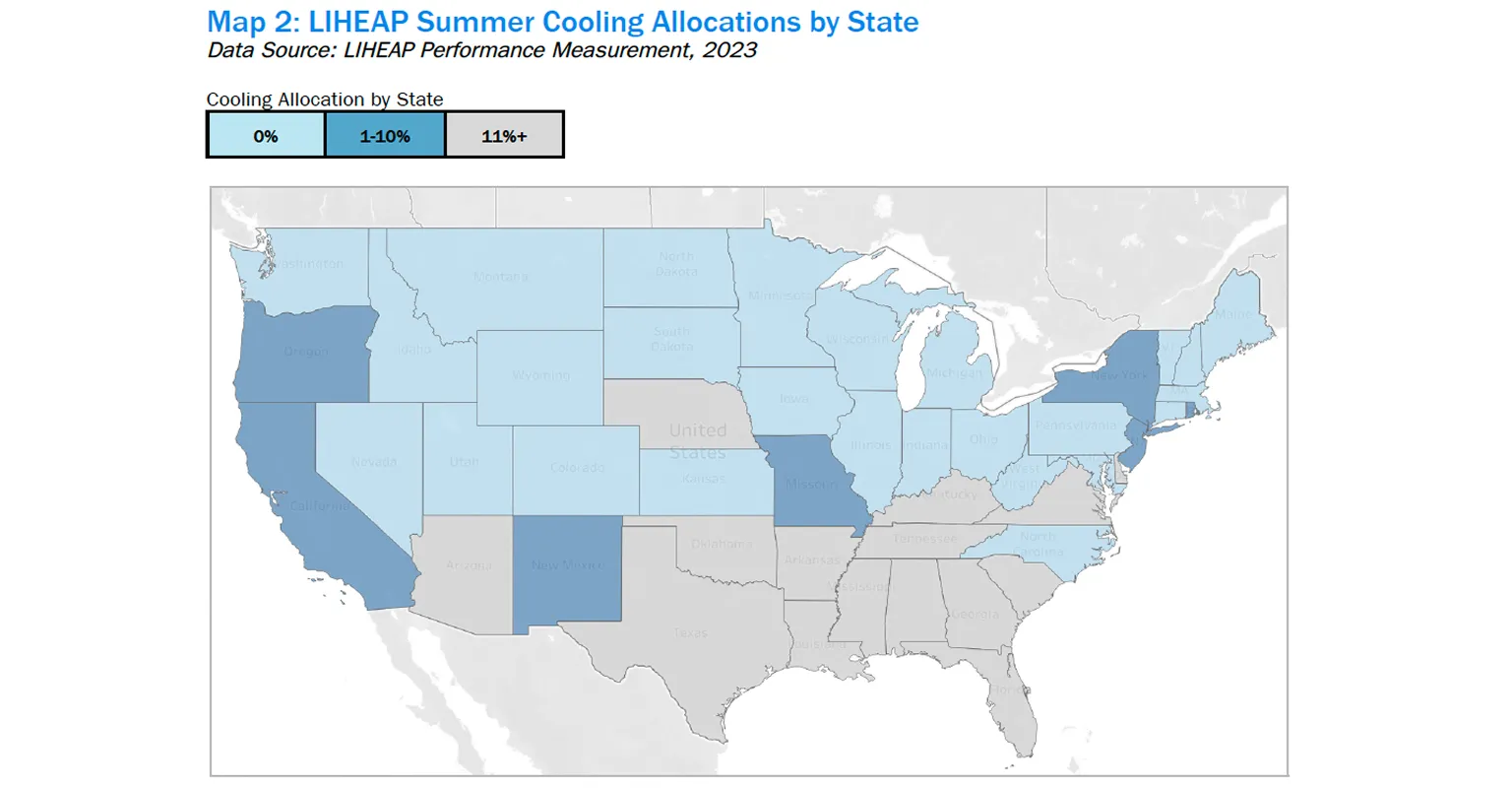
First, states that regularly experience extreme heat but don’t currently allocate any LIHEAP dollars for a summer cooling program could consider such a program (see Map #2). A handful of Sun Belt states, such as North Carolina and Nevada, have relatively hot summers and mild winters but lack summer cooling programs entirely, making them outliers among their regional peers. Many other states experience both extreme heat and extreme cold - such as North Dakota, South Dakota, and Kansas - so the zero-sum tradeoff between investments in winter heating and summer cooling is more complex. However, states that currently allocate no dollars at all to summer cooling might consider a more balanced approach.
Second, states with existing summer cooling programs should evaluate whether they are allocating a sufficient share of their LIHEAP funding to these programs. Some states with extreme heat dedicate only a small percentage of their LIHEAP funds to cooling. For example, California allocates only about 3% of itsLIHEAP funds to summer cooling despite experiencing some of the most extreme summer temperatures in the country. States interested in reallocating more funds to summer cooling could start by reviewing areas where they struggle to fully spend their current allocations. Additionally, some states may already be using year-round crisis funds as de facto summer cooling assistance. Redirecting a portion of those funds to formal summer cooling programs could improve efficiency. In many states, the only way to receive energy assistance with summer cooling bills is through crisis programs, which are often retroactive and require a heavier burden of proof (e.g., a shutoff notice and evidence that disconnection would cause a health emergency) compared to preventative, income-based summer cooling programs.
Third, states can consider giving priority status to populations who are more vulnerable to heat. LIHEAP programs are typically first-come, first-served – operating until funds are exhausted. By designating vulnerable groups (e.g., individuals over 65, young children, and pregnant women) as “priority populations,” states could allow these groups to apply earlier, increasing the likelihood they receive assistance before funding runs out. States may already prioritize some of these populations, but being intentional about prioritization can help increase access among people who need it most.
LIHEAP is not just a public benefit, it is also a critical tool for climate justice
LIHEAP serves millions of Americans and stands as the government’s most significant and direct tool for helping people mitigate the health impacts of extreme heat. As extreme heat becomes increasingly common with climate change, LIHEAP needs to be reconceptualized as a critical tool for climate justice. States that don’t maximize its value are missing an opportunity to protect public health and save lives.